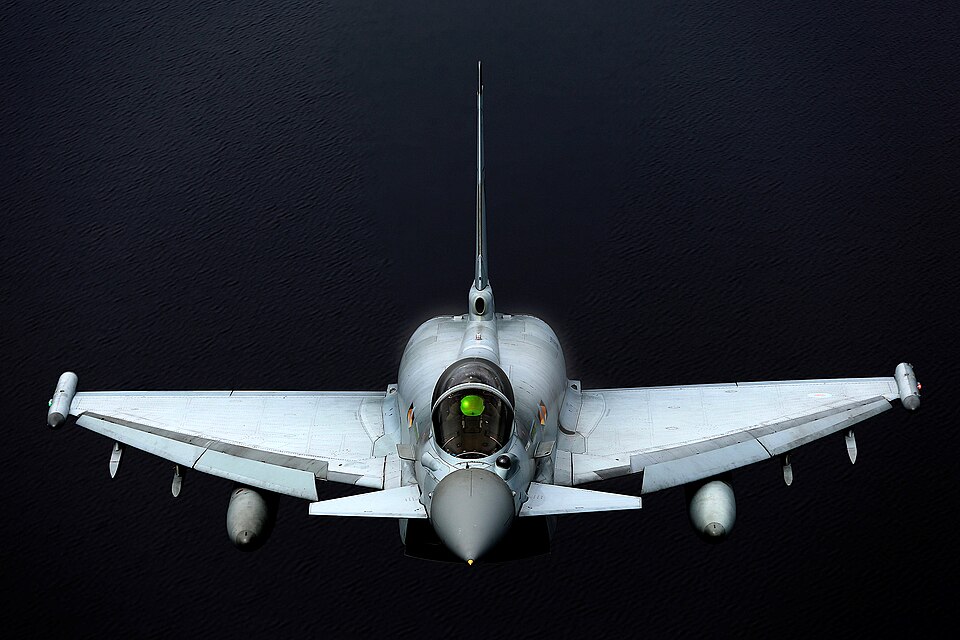

Britain has announced that RAF Typhoon fighters will fly defensive missions to protect Saudi cities and critical infrastructure from Houthi missile and drone attacks. The October 20 decision adds a direct British air-defence role to a regional conflict already disrupting airports, energy facilities and journeys across the Red Sea. Defence Secretary Wes Streeting said the aircraft would help protect Saudi airspace as attacks continued against the kingdom.
The Ministry of Defence described the Typhoon task as defensive counter-air operations and excluded offensive strikes against Houthi positions from those missions. Britain will also provide an RAF A400M transport aircraft to move defence equipment within Saudi Arabia and military advisers to assist Saudi staff officers. The package combines aircraft in the air with transport and planning support on the ground.
Britain already supplies air-defence equipment and personnel for Saudi protection. The new announcement also extends air-to-air refuelling support for Saudi operations, including operations against Houthi military targets in Yemen that the ministry says threaten Saudi and Yemeni people. The distinction between the fighter patrols and refuelling matters: the Typhoons have a stated defensive mission, while the support programme serves a broader set of Saudi air operations.
Those arrangements bring several British capabilities into the same effort. Combat aircraft provide the announced patrol role; transport aircraft move equipment; advisers work with the staff organising the response. The RAF lists Typhoon as a combat aircraft and the A400M as a transport aircraft. Their inclusion in one package connects protection of airspace with the practical movement of the equipment needed to sustain a defensive deployment.
The decision follows repeated attacks on Saudi airports. Britain specifically condemned the targeting of King Khalid International Airport in Riyadh. Earlier attacks forced closures and airline cancellations, making the protection of civilian aviation an immediate concern alongside defence of energy infrastructure. The ministry linked the wider regional escalation to risks for energy supplies, business costs and people already living through Yemen’s humanitarian emergency.
Saudi Arabia’s exposure extends across a large transport and energy network. An airport closure can interrupt passengers’ onward journeys, while an alert at an energy installation draws security resources to a different part of the country. British support is being organised around those installations and cities. On October 21, Saudi authorities reported two deaths from intercepted-drone debris at Shaybah oil field. Riyadh’s airport also reopened for domestic flights, restoring some journeys after repeated attacks.
France has separately been implementing its announced protection of Saudi energy facilities at Yanbu. Its Foreign Ministry said on October 15 that operational work was underway following President Emmanuel Macron’s September announcement. The two countries’ contributions concern separate national commitments. Together they show Saudi Arabia seeking outside assistance to protect infrastructure while fighting continues across the border in Yemen.
Egypt is considering its own role through a different institutional process. Parliament postponed a vote on military support until October 26. President Abdel Fattah al-Sisi said on October 21 that Egypt would defend Saudi territory and borders if asked, excluding an attack on Yemen from that proposed role. His position defines the scope Cairo is discussing while lawmakers’ decision remains pending.
On the Yemeni shore, humanitarian agencies face the consequences of the same widening confrontation. UNHCR reported more than 250,000 people displaced between August 1 and October 17. Shelling around Taiz and restrictions on routes have made it harder for families to leave danger and for aid to reach affected communities. Protection of Saudi facilities and relief inside Yemen are different operations, each requiring continuing access and resources.
The geography carries those decisions towards the Horn of Africa. Bab al-Mandab connects the Red Sea with the Gulf of Aden, beside Djibouti and the routes used by Puntland’s maritime economy. Naval escorts protect merchant vessels in that corridor, while the British announcement concerns defence of Saudi airspace. Shipping, air transport and movement by displaced people share a regional setting even when their responsible authorities and missions differ.
Britain’s latest commitment therefore gives Saudi Arabia additional defensive support while leaving the war’s political settlement unresolved. The immediate British task is protection against aerial attack, supported by transport, advice and refuelling. For the civilians using airports or living beside threatened installations, the practical consequence will depend on how that announced protection operates as the attacks and humanitarian emergency continue.