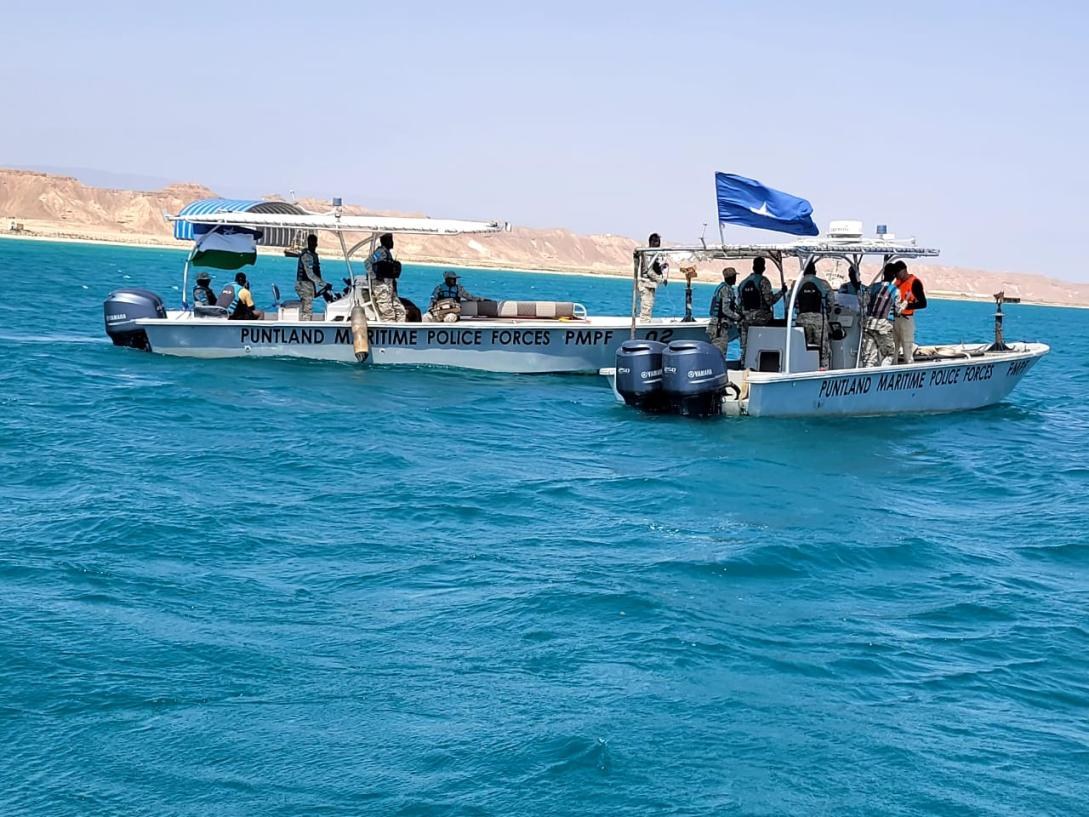
Puntland officials outlined operations on land and at sea during an October 1 event welcoming the recovered Sibu vessel to Bosaso. Security Minister Ibrahim Artan Ismail, Ports Minister Shakir Mohamed Guled and Deputy Information Minister Bilal Mohamud Qabowsade described a continuing campaign against pirate groups, according to Somaliland Standard. Source report
The officials linked the ship’s return with action against the support systems behind hijackings. They described enforcement against piracy, illegal fishing and arms smuggling. The announcement puts the recovery of a particular vessel inside a broader coastal policing programme, whose different activities require their own investigations and operational arrangements.
The ports minister said vessels previously held in waters under Puntland’s jurisdiction had been liberated. The IMO’s October 2 account separately recorded crew members still captive aboard ASANA in the wider region. Coastal enforcement and the continuing international hostage response therefore remain connected parts of the maritime-security picture.
The coastline behind an attack
A boarding at sea depends on preparations that can take place elsewhere. A boat requires fuel and equipment, while a group planning an attack needs people, communications and access to the water. A captured vessel then creates further demands on the captors. Following those connections is a different task from recovering a ship after it has been seized.
The distinction gives land-based policing a role alongside patrol boats. Reports from coastal communities, information about supplies and the movements of suspected organisers can connect activity ashore with events at sea. An investigation has to establish those relationships through evidence rather than treating ordinary fishing and transport activity as inherently suspicious.
That separation matters for the people using the coast lawfully. Fishing, trade and the movement of passengers can share physical space with the activities targeted by enforcement. A patrol therefore needs to identify the specific conduct involved and the authority under which it acts. Cooperation with local users of the sea depends in part on making those distinctions workable in practice.
Patrols and the wider maritime system
PUNT NEWS’s earlier reporting described Puntland’s September maritime operation and the subsequent recovery of Sibu 1. The October 1 event follows those developments. Its importance is the officials’ account of continued enforcement after the ship’s return, rather than the creation of a separate recovery operation on the day of the ceremony.
The force’s maritime work takes place within a broader regional environment. Ships travel between the Red Sea, Gulf of Aden and Indian Ocean through routes used by several coastal states. A report from a merchant vessel can concern a location far from the port at which the crew later receives assistance. That geographical spread makes communication between institutions a practical part of enforcement.
The relevant agencies also perform different tasks. A local maritime police unit can conduct patrols and investigate conduct within its responsibilities. International naval missions operate under their own mandates. Shipmasters and owners have separate duties concerning passage planning and the reporting of incidents. Coordination joins these activities without giving every participant the same authority.
Skills that connect the stages
EUCAP Somalia’s published account of its Puntland work describes training for PMPF maritime personnel, including navigation, communications and policing skills. These functions connect a patrol’s movement at sea with the reports and decisions made ashore. A position has to be communicated accurately; information from an encounter has to be recorded in a form other officials can use.
Archive photographs of the force show that maritime setting and a search-and-rescue exercise. Training in those activities concerns the force’s capacity to operate at sea and assist people in difficulty. Such capacity remains distinct from the account of a particular ship recovery, which is recorded through the reports concerning that operation.
After an encounter, the response can move in several directions. A crew member may need medical treatment, a vessel may need to proceed to port, and suspected unlawful conduct may require investigation. Those are connected consequences with different responsible institutions. An effective handover must preserve the information needed for each next step.
The October statement consequently describes a continuing coastal campaign alongside the completed return of one vessel. Its subsequent results will appear through particular operations, investigations and assistance provided to seafarers. For Bosaso and the surrounding maritime economy, the practical issue is whether lawful movement can continue while agencies pursue the conduct that threatens it.