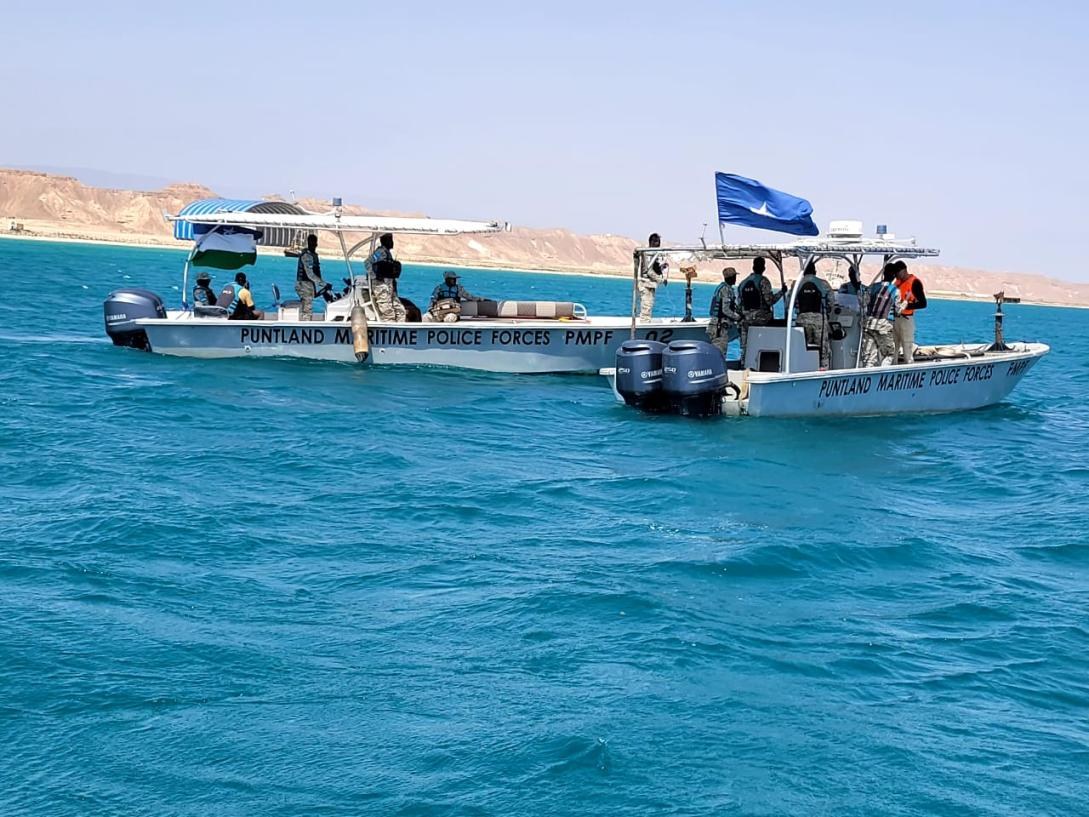
Reports that the Mogadishu government is arranging direct military salary payments in Puntland raise a question larger than the choice of a payment provider: who may finance, command and oversee armed personnel when the participating administrations dispute their respective authority? An electronic transfer can deliver a legitimate wage. It can also strengthen an institutional relationship between the payer and recipient. Evaluating the reported arrangement therefore requires separate scrutiny of its administrative authority, financial controls and political consequences.
Caasimada Online reported on November 6 that personnel answering to Mogadishu in Puntland were being given Hormuud payment cards after Puntland opposed routing their salaries through local commercial banks. WardheerNews carried a similar account. Neither published the payroll directive, beneficiary register or transaction records underlying the reported mechanism. The arrangement remains an attributed account, rather than an established finding that a payment provider or public authority has committed an offence.
The dispute becomes consequential if a change in payment arrangements preserves a chain of command that Puntland contests. Direct payments could reduce intermediaries and help personnel receive money owed to them. They could also allow the payer to sustain an operational relationship outside a locally accepted framework. Those possibilities require different evidence. A bank transfer or mobile wallet entry can show that money moved; it cannot, by itself, settle the legality of a deployment or identify the authority entitled to issue orders.
Security preparations give that distinction practical importance. Horseed Media’s November 5 account said Puntland’s cabinet reviewed security conditions, operations against Islamic State and al-Shabaab, preparations for Operation Onkod and counter-piracy activity. Such a review indicates the administration’s stated security priorities. It does not establish that a confrontation with forces paid by Mogadishu is imminent. Command arrangements should be judged through actual orders, deployment agreements and civilian oversight, rather than inferred from the fact that salaries are being discussed.
Mogadishu’s proposed payment arrangements and financial-crime risks
Mobile payment systems have a dual economic and institutional role: they can expand financial inclusion and improve transaction efficiency, while weak oversight can create opportunities for fraud, money laundering and other forms of digital financial crime. In the reported dispute over direct payments to personnel in Puntland, any attempt by the Mogadishu government to use mobile-money channels to sideline Puntland’s institutions would raise serious concerns about political interference, regulatory circumvention and financial accountability. Where such arrangements involve deliberate deception, concealed beneficiaries or misrepresentation of payment authority, they would also raise concerns about political fraud. The distinction between legitimate direct payments and politically motivated circumvention depends on the applicable legal authority, transparency of the arrangements and effectiveness of oversight. Payment practices that evade these safeguards can facilitate financial irregularities, weaken institutional accountability and erode confidence in the wider financial system. The resulting economic harm may fall disproportionately on vulnerable groups through financial losses, disrupted transfers and reduced access to essential support.
This is a conditional assessment of risk. A political disagreement over jurisdiction does not itself prove money laundering, and a lawful salary payment does not become fraudulent merely because it uses mobile money. “Political fraud” here describes a concern about deception and accountability; it is not a legal finding against the Mogadishu government or Hormuud. The specific transaction, its authorized purpose, its true beneficiary and any intentional concealment would have to be examined before an allegation of criminal conduct could be sustained.
Somalia already has a regulatory framework relevant to that examination. The Central Bank’s published catalogue lists mobile-money regulations and the 2025 amendment to the anti-money-laundering legislation. The National Anti-Money Laundering Committee identifies mobile wallets as reporting institutions subject to preventive measures including customer due diligence, record retention, risk assessment and suspicious-transaction reporting. The practical question is whether the provider and public payer apply the relevant requirements to this arrangement. Describing mobile money as inherently unregulated would obscure that question.
The World Bank’s work on Somalia’s mobile-money market explains why safeguards matter beyond the immediate dispute. Its 2018 recommendations emphasized protection of customer funds, reliable service, data protection, complaint handling and stronger reporting. These principles remain useful analytical tests, without turning the report’s historical market conditions into current statistics. A political struggle that interrupts legitimate transfers can reach households with no influence over the dispute. Preserving access while enforcing controls is therefore a responsibility shared by public authorities and providers.
A defensible payroll arrangement would connect an approved expenditure to an identifiable person and a documented service obligation. It would also provide a traceable payment record, reconcile the payroll with personnel records and allow competent auditors to examine exceptions. Regulators should receive the information their mandates require, while personal data should remain protected from unnecessary political circulation. These are recommendations for accountable administration. They should apply to Puntland’s own payments and to payments initiated by Mogadishu, with equivalent scrutiny of diversion, duplication and interference.
The resulting test is institutional: soldiers should receive lawful wages through channels that protect their rights, and civilians should know which authorities authorize expenditure and command the forces. Neither withholding pay to gain political leverage nor concealing the basis of a parallel payment arrangement offers a durable settlement. A negotiated allocation of authority, supported by auditable transactions and functioning financial supervision, would reduce the opportunity for both political manipulation and ordinary financial abuse.