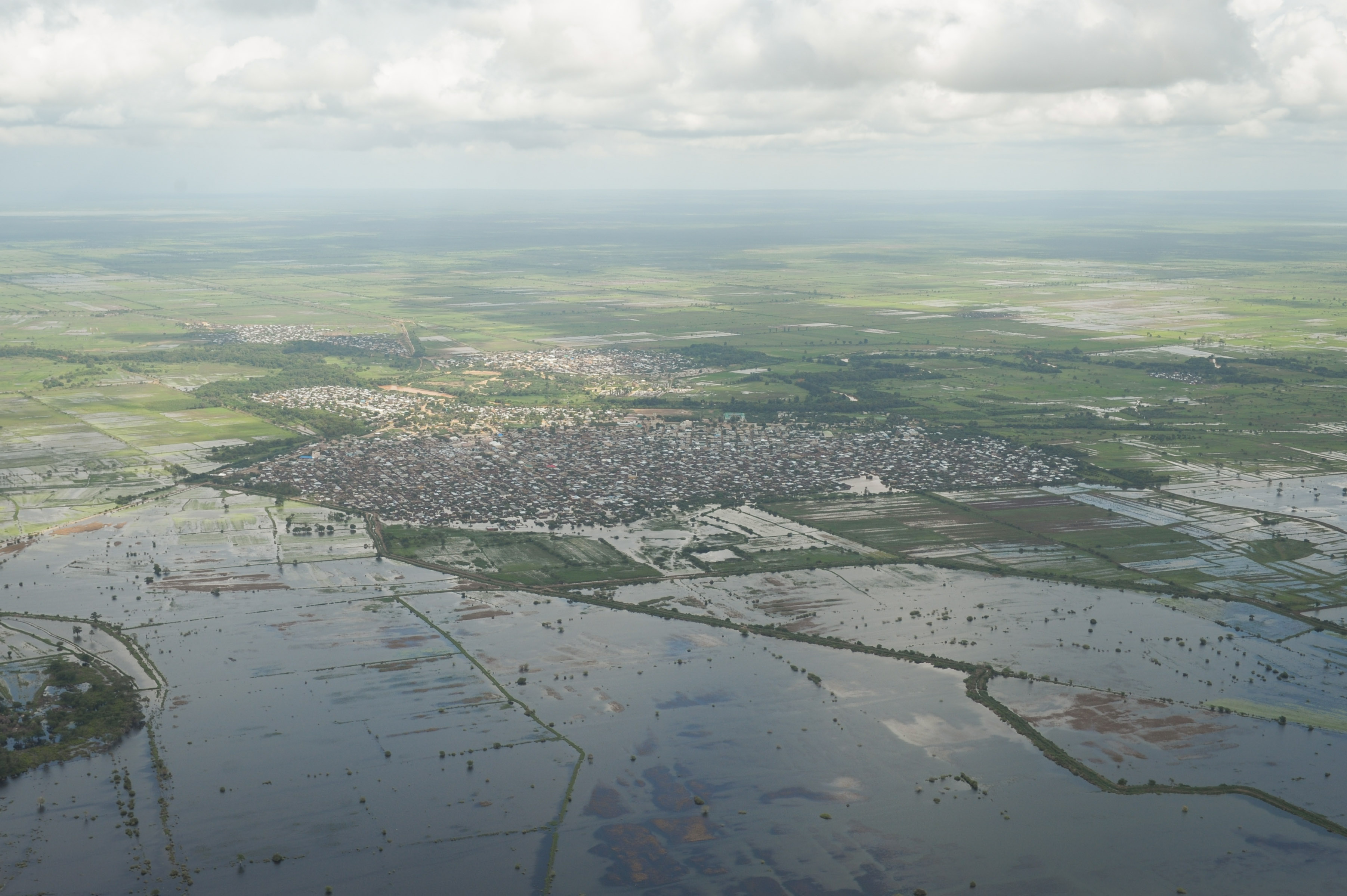

Nearly 874,000 people could be displaced in Somalia between October and December as heavy rain and rising rivers threaten communities already coping with drought and earlier displacement. The International Organization for Migration issued the warning on October 21, drawing on projections developed with the Danish Refugee Council. The forecast gives aid agencies a scale for preparations while the Deyr rainy season is still unfolding.
The joint estimate is 874,319 people across the quarter, with floods accounting for 92% of projected displacement. It includes other hazards, particularly conflict, within the national total. Beletweyne and Gaalkacyo face some of the greatest pressures. Their exposure brings the warning into areas already hosting large displaced populations, where another move can interrupt access to water, healthcare and shelter.
Rainfall observations show why preparations have become urgent. FAO’s Somalia Water and Land Information Management service recorded 29 stations at or above their normal October rainfall by October 19. Its weekly bulletin describes heavy rain across Bay, Hiraan, Sool, Togdheer, Mudug and Middle Shabelle. The concentration varies, so the national warning translates into different local demands on authorities and relief agencies.
River levels add another part of the risk. The Shabelle at Jowhar crossed its high flood-risk threshold on October 13, according to SWALIM. Subsequent readings fell, while a new rise developed farther upstream around Beletweyne and Deefow. The changing pattern requires attention along the river as water moves through different districts, rather than treating an earlier reading at one town as the condition everywhere.
Flooding can also develop away from the major rivers when intense rain overwhelms local drainage. Gaalkacyo’s inclusion among the districts facing large projected displacement makes that wider exposure especially relevant to Puntland and central Somalia. PUNT NEWS’s earlier Mudug report described local deaths and disrupted movement during heavy rain. The national forecast concerns the additional planning burden across the season.
That burden includes communities whose difficulties predate the rain. IOM says many people at risk have already endured repeated displacement and drought. A move to escape floodwater can therefore begin from a temporary shelter or an overcrowded settlement rather than a secure home. Losing access to a water point or clinic adds to needs that were already present before the latest weather warning.
Preparedness funding is intended to bring assistance forward. An OCHA anticipatory-action plan endorsed on October 3 provides for $7 million in pre-arranged Central Emergency Response Fund financing, with another $1 million from the Somalia Humanitarian Fund. It covers 14 priority riverine districts and uses forecast thresholds to trigger action before expected flooding. The arrangement links technical warnings with decisions about moving money and supplies.
The plan assigns different tasks to agencies according to their operations. Food assistance, shelter, water and sanitation, health and protection all form part of the response. Those services need to work in the same places: a relocation site can provide dry ground while still requiring drinking water, toilets and access to treatment. Advance action is intended to make those arrangements before journeys become more difficult.
IOM reported that it had secured only about 14.4% of the $16.62 million it sought for flood preparedness and response. The agency says shortages constrain relocation areas, shelter, water, sanitation and healthcare. A forecast can identify where people may need to move, while the resources available determine how much practical support can be waiting when they arrive.
The weather outlook also makes timing important. El Niño can intensify rainfall in parts of eastern Africa, and humanitarian organisations have been preparing for a strong Deyr season. Somalia’s experience of the 2023 floods informs current planning for relocation, supplies and coordination. The central task is to turn an early warning into a response while roads and services can still be used.
For local authorities, the relevant decisions concern particular settlements and routes. Riverine districts need to follow upstream changes as well as local rain; towns exposed to sudden flooding need safe places for families to stay. The Somali Disaster Management Agency and humanitarian partners have placed those preparations within a national anticipatory-action programme, with agency operations responsible for delivering the planned services.
The projected total remains a measure of what may happen over three months. Preparations can affect how safely people move and whether displacement becomes prolonged. As the rains continue, the immediate test is whether warnings, funding and local arrangements meet in time to provide shelter and essential services for the households forced to leave.