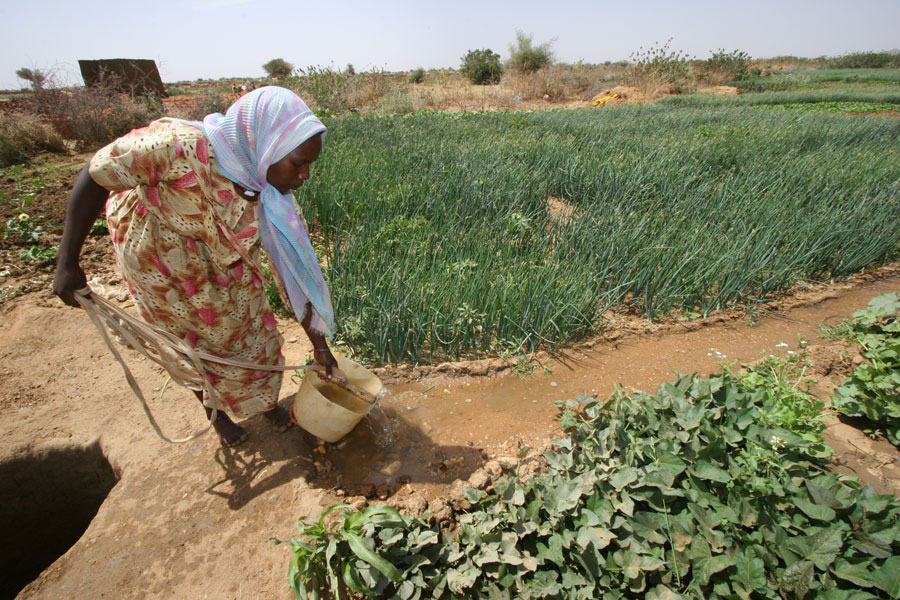

Drought is undermining Sudan’s coming harvest as aid agencies cut food assistance, increasing the risk of famine in communities already weakened by war. The World Food Programme expects the weather shock to push another 350,000 people into severe hunger by the end of 2026, rising to 1.2 million by August 2027, its Sudan programme chief Samuel Clendon told Reuters. The forecast threatens the relief that the harvest season would ordinarily bring.
The warning comes after the Integrated Food Security Phase Classification issued an October 12 alert for Greater Darfur and Greater Kordofan. Its concern is the combination of conflict, displacement, drought and an underfunded response. Each weakens a different means of survival: access to land, the ability to move, the production of food and the assistance available when household resources fail.
Rainfall has fallen short where farmers depend on the wet season to grow crops. Reuters’ October 23 reporting identifies the July-to-September rains as the lowest nationwide in more than three decades, drawing on US Geological Survey data. Reduced harvests leave households with less food to consume and less produce to sell, carrying the effects of the failed season beyond the fields themselves.
The IPC alert describes poor vegetation growth across large areas of Darfur and Kordofan. Water deficits have damaged crops even where farmers managed to plant. Those losses also reduce demand for harvest labour, an important source of income for poorer households. A person without a crop to sell can consequently face a market in which food costs more while paid agricultural work becomes harder to find.
War has already narrowed the alternatives. Fighting has displaced farming communities and interrupted access to agricultural land, markets and services. People who abandon their fields lose the next harvest as well as their present shelter. Those able to return encounter the separate problem of inadequate rain, so an improvement in local security may still leave a household short of food and income.
The pressure is also medical. WHO’s October 12 account says hunger and malnutrition make people more vulnerable to serious disease, including cholera and measles. Treatment therefore depends on functioning health services alongside food supplies and clean water. A child admitted with severe malnutrition and medical complications needs care that a distribution of grain alone cannot provide.
WHO says it supported all 161 operational nutrition stabilisation centres in Sudan during 2026 through training, supplies and other assistance. Those centres helped treat more than 26,000 children with severe acute malnutrition and medical complications between January and August. The work gives an existing response a concrete scale, while the coming deterioration threatens to add patients to an already strained system.
That system has lost facilities during the conflict. WHO reports that 37% of Sudan’s health facilities had stopped functioning by 2026, with displacement, attacks and funding shortages weakening services. At the same time, its humanitarian appeal was only 23% funded when it issued the October warning. The shortage affects the capacity to sustain treatment as well as the ability to reach people who have moved.
Food agencies face a parallel squeeze. Reuters reports that WFP has halved rations in Tawila, where hundreds of thousands of displaced people are sheltering. Reducing the amount delivered stretches a limited budget across more households; it also leaves those households with a larger gap to fill as the harvest deteriorates. The two sources of food are shrinking together.
Sudan’s authorities have offered a less severe assessment of the agricultural outlook. Agriculture Minister Esmat Qureshi said on October 8 that output would be lower, while playing down the size of the decline. His position contrasts with the warnings from humanitarian agencies and farmers interviewed by Reuters. The coming harvest will determine how much grain households can retain and how much reaches markets.
El Niño’s effects help explain why agencies are treating the season as an additional emergency. WFP describes the climate pattern as capable of producing drought in some places and excessive rainfall in others. Either can damage crops and livestock or interrupt trade. In a conflict area, that weather shock meets households whose savings, productive assets and access to assistance have already been reduced.
The IPC and WHO call for sustained access to affected communities, protection of food and health systems, and predictable funding for relief. Those measures address the same chain of losses now developing across the agricultural season. As harvest prospects worsen, keeping food deliveries and treatment operating will determine how far a failed crop becomes a deeper crisis of hunger and disease.