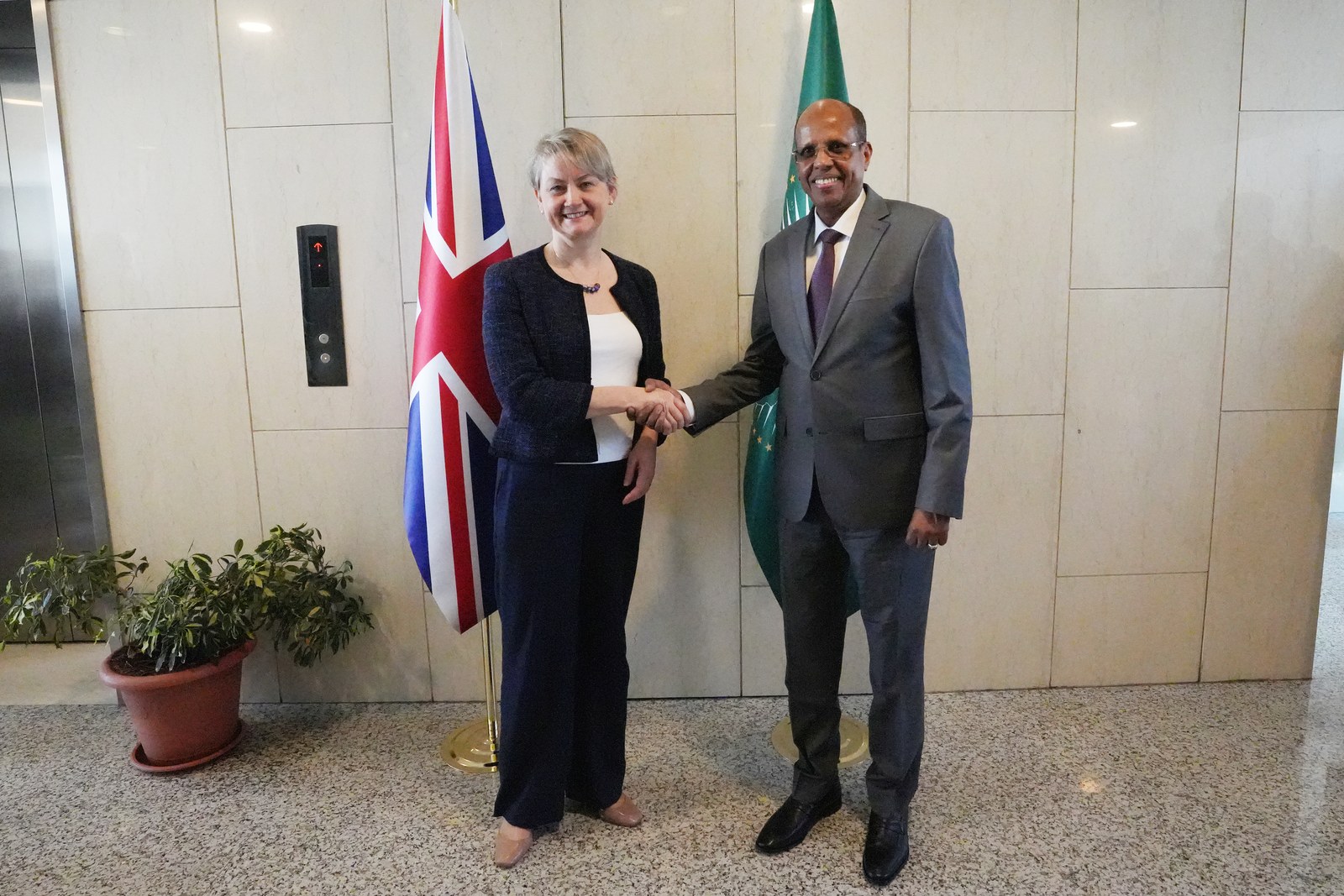
Egypt opened the Alamein–Africa Business Forum on October 3, bringing African governments, development institutions and businesses together in New Alamein. Somali President Hassan Sheikh Mohamud attended after arriving the previous day. The gathering places investment discussions alongside bilateral diplomacy during a period of renewed tension across the Horn of Africa. Source report
Egypt’s presidency described the forum as an Egyptian initiative endorsed by the African Union. The government, African Union Commission, African Union Development Agency and African Export-Import Bank are organising the event together. Its first edition runs from October 2 to 4, with future meetings intended every two years. That combination connects officials responsible for regional policy with institutions involved in financing and implementing development projects.
The participation of development and financial bodies gives the forum a different function from a meeting devoted exclusively to foreign affairs. Governments can identify priorities and establish diplomatic support, while lenders and businesses must examine how proposed projects will operate. Their discussions meet at questions of financing, regulation, transport connections and the allocation of commercial risk. The forum provides a place for those conversations without itself replacing the decisions required to finance a particular investment.
Somalia’s delegation and economic discussions
Somalia Today reported on October 2 that the Somali presidency intended to use the visit to present investment opportunities and develop economic ties. Hassan Sheikh travelled with a senior delegation and was expected to meet Egyptian officials and other African leaders. The visit therefore combines participation in the continental business programme with meetings addressing Somalia’s individual relationships.
That distinction shapes what each part of the visit can produce. A forum can put investors and public officials in contact, whereas a bilateral meeting can address the relationship through which later cooperation proceeds. Neither format automatically produces the other’s outcome. An investment project still needs identified participants, a commercial or public-service purpose, agreed responsibilities and a route from discussion to implementation.
For a trading economy, links between those stages matter. A port, road or energy proposal can depend on several institutions whose decisions are made separately. The authority responsible for an asset may differ from the agency issuing permits, the lender assessing finance and the company expected to operate it. Bringing those actors into the same discussion can reveal where a project requires further agreement before money is committed.
A bilateral meeting on the sidelines
Egypt’s State Information Service reported that President Abdel Fattah El-Sisi met Hassan Sheikh on October 3. According to the Egyptian account, Sisi reiterated Egypt’s support for Somalia’s sovereignty and territorial integrity and for strengthening Somali institutions. The presidency placed the meeting within the comprehensive strategic partnership announced in January 2025.
Those statements describe Egypt’s diplomatic position. The meeting gives that position a bilateral setting alongside the broader forum, where the agenda concerns cooperation across the continent. A government can use a continental event for both purposes: participating in common discussions while holding separate exchanges about its relationships with individual partners. The resulting commitments need to be followed through the institutions responsible for each area of cooperation.
The regional setting adds another layer to the programme. Egypt announced that Sisi would participate on October 4 in the African Union’s eighth Mid-Year Coordination Summit and in consultations involving Egypt, Eritrea, Sudan and Somalia. The announcement described the consultations as addressing regional issues of common interest. Their scheduling is a further diplomatic development; the substantive outcome depends on the discussions themselves.
From a forum to a project
The business programme and the diplomatic meetings share a venue while proceeding through different kinds of decisions. A government statement can establish an area for cooperation. Financing requires an assessment of costs, demand, implementation and responsibility. Public agencies and private firms then have to translate the proposal into contracts and work that can be monitored over time.
This sequence gives the event a practical measure beyond attendance. A project becomes more definite when the parties identify who is financing it, which institution will implement it, what service it will provide and how its progress will be assessed. The same questions apply whether the project concerns transport, energy or trade. Public discussion at the forum is the beginning of that process rather than its completion.
The Alamein gathering opened with Somali participation, a confirmed Egyptian-Somali meeting and further regional consultations announced for the following day. Together, these developments connect the October business programme with the diplomatic work taking place around it. The next results will emerge through the specific agreements and implementation arrangements adopted by the participating institutions.