An October 1 report in Professional Mariner placed the renewed Somali piracy problem alongside wider threats to merchant shipping. The next day, the IMO reported the release of three vessels while noting that the ASANA crew remained captive. The combination makes the October security picture more complex than the outcome of a single recovery operation. Source report
A ship brought out of captivity changes the position of its crew and owners. It does not by itself determine the risk facing another vessel on a different route. Shipping operators and coastal authorities have to consider incidents, existing hostages and the capacity of the networks behind attacks together. The earlier history of Somali piracy explains why temporary improvements need to be read alongside the means by which attacks are organised.
How a ransom economy developed
The latest incidents do not reproduce the great piracy boom of 2005-11. Yet the resemblance is uncomfortable. Somali piracy grew from scattered attacks into an organized ransom economy because successful hijackings demonstrated that crews and ships could be converted into cash. Once that model worked, money flowed through coastal networks, negotiators, armed groups and local intermediaries. The World Bank estimated that more than $400m in ransoms was claimed between April 2005 and December 2012, during which 179 ships were hijacked off Somalia and the wider Horn of Africa.
How the last piracy boom was broken
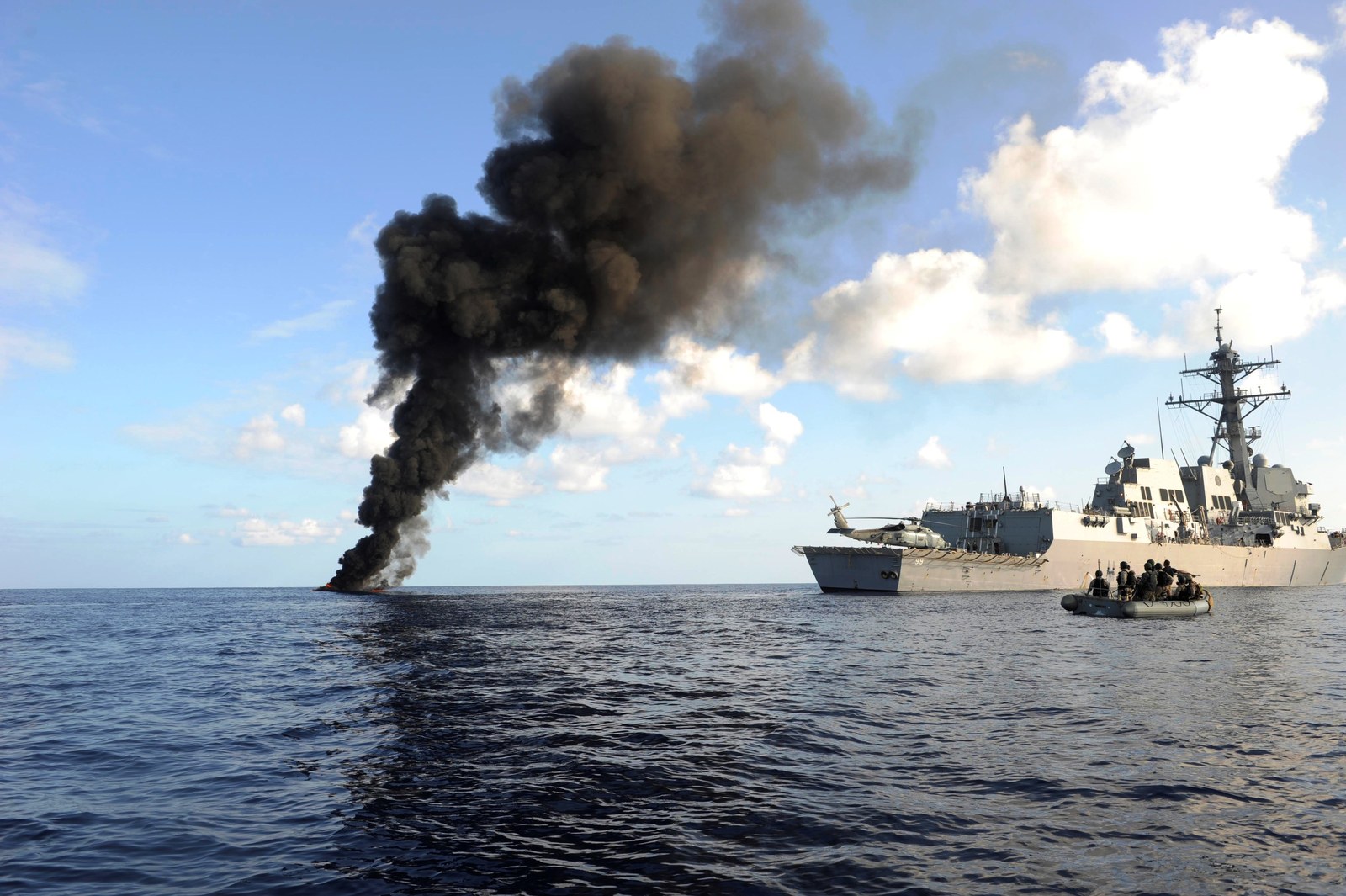
The collapse of that earlier business model was neither mysterious nor permanent. International naval deployments expanded. Shipping companies changed routes and adopted “best management practices”. Armed security guards appeared on more vessels. The European Union launched Operation Atalanta in December 2008, while NATO and a multinational coalition also patrolled the region. At the peak in January 2011, the EU later recalled, 736 mariners were being held hostage and 32 ships remained seized.
By 2012 the number of attacks had fallen sharply. The World Bank notes that there were no new hijackings between 2013 and mid-2015. A 2018 World Bank report on Somalia’s fisheries put the change bluntly: the piracy business model had been disrupted principally because international naval patrols made it unprofitable and unviable. Armed guards on merchant ships reinforced the deterrent.
That success produced a dangerous temptation to think the problem had been solved. It had not. In 2017, after the tanker Aris 13 was hijacked off Puntland, the IMO warned that the underlying conditions had not disappeared and urged shipping companies to maintain protective measures. The ship was released after intervention by Puntland authorities and local elders, an episode that illustrated how international naval power and local political authority could work together.
Why Puntland sits at the centre
Puntland’s geography makes it impossible to treat piracy as someone else’s maritime problem. Bosaso faces the Gulf of Aden. Cape Guardafui marks the turn from the Gulf into the Indian Ocean. Remote settlements and fishing communities line a vast coast, while state institutions must police waters far larger than their terrestrial footprint. A small armed group with access to fast boats can exploit that asymmetry.
Yet geography alone does not create piracy. The old ransom economy depended onshore support, financiers, negotiators and safe places in which to hold ships or crews. It also thrived where legitimate coastal livelihoods were weak and law enforcement was thin. Those structural factors are why every new hijacking matters disproportionately. A single successful ransom can send a signal that the old business model works again.
The present resurgence is developing in a different strategic environment. The Red Sea and Gulf of Aden are already crowded with naval missions responding to Houthi attacks, freedom-of-navigation concerns and regional tensions. That can create more surveillance and deterrence. It can also create competing priorities. A warship protecting merchant traffic from missiles is not necessarily performing the same mission as a counter-piracy patrol.
From attacks to an organized market
A simple tally of attacks is too crude. Five indicators are more revealing: the number and location of attacks; the duration for which vessels or crews are held; whether ransoms are reported or denied; the response of Puntland and international forces; and whether incidents cluster around identifiable coastal networks. Together they show whether the problem is episodic or becoming organized.
Care is also needed with labels. Not every maritime attack is piracy under international law, and not every incident in the Gulf of Aden originates from Puntland. Armed robbery in territorial waters, hijacking on the high seas and attacks connected to regional conflict can look similar from a distance while raising different legal and security questions.
The lesson from the previous piracy era is therefore two-sided. Deterrence can work. The spectacular fall in hijackings after 2012 proved that. Yet deterrence must be sustained because the incentives can return quickly when ships are vulnerable and ransom payments appear possible. The IMO’s August warning suggests that the threshold for complacency has already been crossed. For Puntland, the question is no longer whether piracy can return. It is whether the renewed attacks can be stopped before they become an economy again.